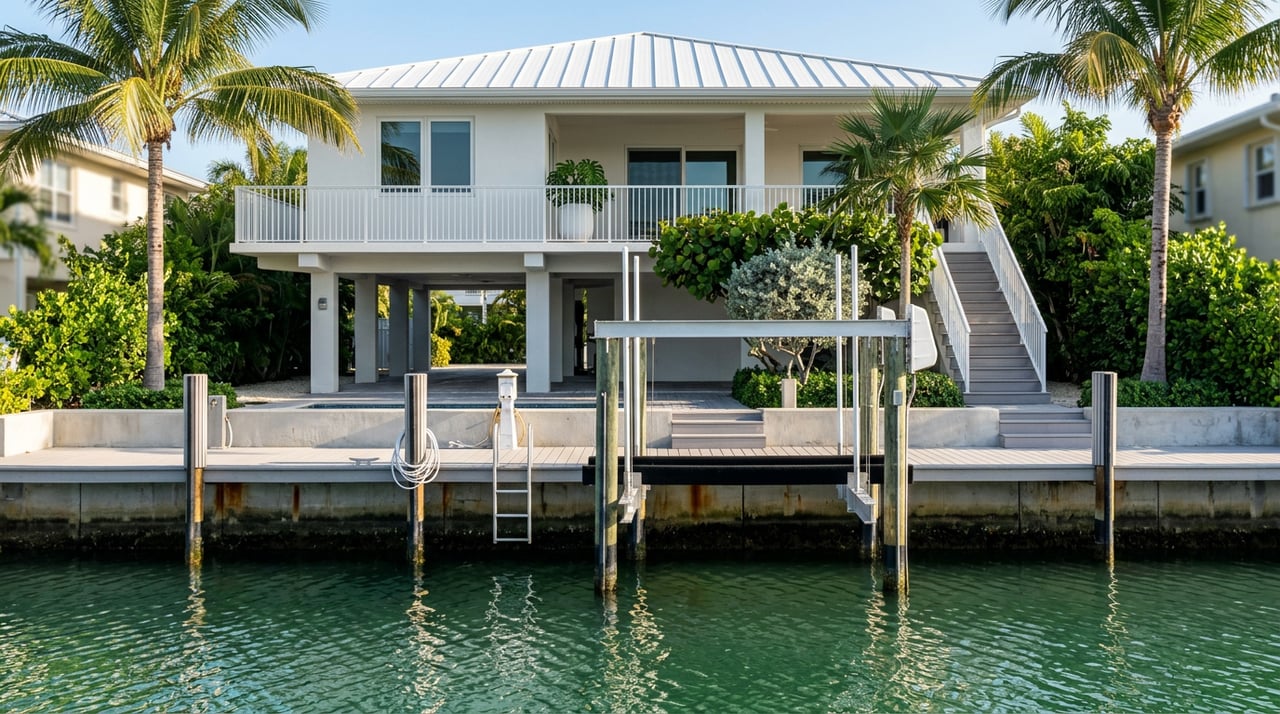
If your perfect Keys day starts with lines off the dock and ends with wheels down at your own neighborhood runway, Summerland Key deserves a close look. You want a home that makes both boating and private flying seamless, with practical access to channels, service yards, and a permission-based airstrip that fits your aircraft. In this guide, you’ll learn how Summerland Key stacks up for canal depth, open-water access, the private airstrip, permitting, and storm planning so you can buy with confidence. Let’s dive in.
Why Summerland Key fits boaters and pilots
Summerland Key pairs a private residential airstrip with canal-front living. The on-island Summerland Key Cove Airport (FD51) offers private-use access for permitted pilots, while many homes sit on dredged canals that lead toward Niles Channel and Kemp Channel. That rare fly-in plus waterfront setup is what sets the area apart from most Keys neighborhoods. You will want to verify runway permissions and canal depths for your specific needs, but the lifestyle alignment is strong if you value both air and water.
The private airstrip: FD51 essentials
Pilots should start with the field’s official listing. According to the FAA-derived data published on AirNav for FD51, the runway is oriented 12/30 and is a private-use strip that requires prior permission. Usable length and width have varied in published sources over time, so confirm the current master record and any displaced thresholds before planning operations.
Runway basics to verify
- Confirm the latest runway dimensions, surface condition, obstacles, and remarks on the AirNav FD51 page.
- Expect left-hand patterns and local SOPs that prioritize safety and neighbor relations. Always check for NOTAMs and seasonal notes.
Access, permission, and local rules
- Permission is required to land. The operator posts contact information and procedures on the Summerland Key Airport site.
- Be ready to provide insurance documents if requested and clarify any landing or membership fees with the airport manager.
Aircraft fit and practical limits
- The strip serves piston singles, light twins, and, on a limited basis, some turboprops. A commonly cited landing weight restriction around 10,500 lb has been referenced in aviation coverage, though you should verify current limits with the operator and the FAA record. For background on the community-managed nature of the field and operating culture, see this overview from Flying Magazine.
Hangar-home potential
Some properties have runway proximity or hangar-home potential, but eligibility is parcel-specific. Verify that a lot is on the short list of hangar-home capable parcels, and confirm Monroe County zoning, building rules, and any airport access agreements in writing. Obtain documentation from the seller and the airport manager before you model your build around airside access.
Canals, channels, and real access to blue water
Summerland Key’s boating appeal comes from its canals and proximity to through-channels like Niles Channel and Kemp Channel. Official publications like the NOAA Coast Pilot note that many Lower Keys channels can have modest controlling depths and advise local knowledge. Depths can vary with tides, weather, and shoaling, so you should confirm your intended route at mean low water.
“Deep water” here is a local term that usually means no fixed low bridges to the main channel and enough depth at mean low water for typical center consoles or similar boats. In many interior canals, depths can be in the low single-digit feet at mean low water. For larger center consoles, sportfishers, or boats with greater draft, insist on a recent hydrographic check. A practical way to frame it is to request a bathymetric confirmation before you assume full-time operation. The Coast Pilot excerpt reinforces the need for local charts and surveys.
Typical dockage on Summerland Key
You will frequently see concrete seawalls, concrete docks, and boat lifts rated for popular recreational boats. Lifts commonly range into five-figure pound ratings, and private dockage lengths vary widely from roughly 40 to over 100 feet, depending on the parcel. Always confirm dimensions and permits in the record rather than relying only on listing remarks.
Permits, seawalls, mangroves: what to know
Nearshore work in the Florida Keys is governed by multiple agencies, and coordination is the norm. The Florida Keys National Marine Sanctuary requires a complete submission for projects that may affect sanctuary resources, and most docks or seawall projects will involve state, federal, and county review. The Sanctuary outlines its nearshore construction guidance here: Florida Keys National Marine Sanctuary permits.
- Expect multi-agency review for new docks, substantial repairs, or any dredge and fill. The Sanctuary often requires benthic surveys, and design elements like grated or elevated decking may be necessary to protect seagrass or hardbottom.
- Dredging or deepening residential canals is difficult and expensive in the Keys and is often not feasible. Do not assume you can deepen an existing canal without early consultations.
- Mangroves are protected under the Florida Mangrove Trimming and Preservation Act. Trimming or removal requires following specific rules and, in many cases, permits. Review the Florida DEP’s homeowner guidance on mangroves here: FDEP mangrove program.
Before you buy, request as-built plans, permit numbers, and any past approvals for the dock, seawall, and boat lift. Review Monroe County records for local permits and verify that work aligns with the recorded authorizations. If none exist, budget time and resources for compliance or new applications.
Marinas, haul-out, and service access
While Summerland Key is strongly residential, major yard services cluster in Marathon. Boot Key Harbor anchors several full-service marinas, fuel docks, and travel lifts, including options like Sombrero Marina Dockside. For a sense of services offered, you can review a representative Marathon facility here: Sombrero Marina Dockside. Key West also offers larger-yacht support, but it is farther by road and water.
When you compare neighborhoods, consider the time and cost to reach a travel lift and specialized mechanics. Ask marinas about:
- Gas and diesel availability
- Pump-out services and in-water repairs
- Travel-lift tonnage and beam limits
- Seasonal slip availability for transients or larger boats
If you plan frequent haul-outs or run a heavier vessel, Marathon’s infrastructure may factor into your decision.
Flood, insurance, and resilience planning
Summerland Key is low-lying. The field elevation for FD51 is listed at about 4 feet on AirNav, which highlights why flood risk, storm surge, and sea-level rise need to be part of your plan. Before you go under contract, pull the FEMA flood map panel and zone for the specific parcel using the FEMA Flood Map Service Center. Verify Monroe County’s current base flood elevation and finished-floor requirements for any new construction.
Insurance is a key cost driver. Wind and flood policies in the Keys have unique underwriting standards and pricing. Get quotes early and include potential mitigation or rebuild costs in your budget. For waterfront homes, consider resilient dock materials, lift heights that clear storm surge projections, and secure storage plans for boats during hurricane season.
How Summerland Key compares
Summerland Key’s unique advantage is the private runway combined with canal and ocean access. For many pilot-owners, the ability to land nearby and be at your dock in minutes is the deciding factor. Marathon and Duck Key, by comparison, offer deeper-draft infrastructure and a broader selection of haul-out and service yards, which can be attractive for larger boats or owners who schedule frequent yard time. If your priority is fly-in convenience plus backyard docking, Summerland Key stands out. If you need regular heavy-yard capacity, Marathon’s marina ecosystem may edge it out for practicality.
Buyer due-diligence checklist
Use this list to streamline your pre-offer work:
- Confirm canal and channel depths for your vessel. Request a recent hydrographic or bathymetric check at mean low water and review charted routes, as noted in the Coast Pilot.
- Review recorded permits and as-built drawings for the dock, seawall, and boat lift. Gather any state, federal, and Sanctuary approvals shown in the FKNMS nearshore construction guidance.
- If mangroves are present, obtain the permit history or authorized trimming documents. Learn rules in the FDEP mangrove program.
- Verify airpark rights and practical air access. Confirm runway-license or landing-fee requirements, insurance needs, and local SOPs with the operator at the Summerland Key Airport site.
- Check the FEMA flood zone and Monroe County elevation standards for the parcel, and get flood and wind insurance quotes early through the FEMA Flood Map Service Center.
- Confirm the nearest full-service yard and travel-lift capacity to plan haul-out logistics; start with Marathon facilities such as Sombrero Marina Dockside.
- For pilots, verify current FD51 runway dimensions, displaced thresholds, and any operating limitations on AirNav and obtain written landing permission from the airport operator before relying on routine access.
Your next move
If Summerland Key aligns with your boating and flying goals, the right process makes all the difference. From parcel-level canal-depth checks and permit records to coordination with the airport manager, you want a concierge partner who understands island logistics and aviation-adjacent properties. For tailored guidance, private tours, and a strategy that matches your lifestyle, connect with Ally Kelley.
FAQs
Is the Summerland Key Cove Airport open to the public?
- No. FD51 is a private-use airstrip and requires prior permission to land. Review field data on AirNav and contact the operator for authorization.
How deep are Summerland Key’s residential canals?
- Depths vary by canal and tide. Many interior canals in the Lower Keys can be shallow at mean low water, so request a recent depth check and review the Coast Pilot for channel notes.
What does “deep water” usually mean in the Keys?
- Locally, it often means no fixed low bridges to a main channel and enough depth at mean low water for typical center consoles. Always verify depths for your specific boat at mean low water.
Can I build or expand a dock on Summerland Key?
- Possibly, but approvals are multi-agency. Expect coordination with Monroe County, FDEP, the U.S. Army Corps, and the Sanctuary. Start with FKNMS nearshore construction guidance.
Where will I haul out my boat near Summerland Key?
- Most owners use Marathon’s marina cluster around Boot Key Harbor, which offers fuel, repairs, and travel lifts. See a representative option at Sombrero Marina Dockside.
How should I approach flood insurance for a canal-front home?
- Pull the parcel’s FEMA panel and zone on the FEMA Flood Map Service Center and get quotes early for wind and flood coverage. Confirm Monroe County elevation requirements for any new work.