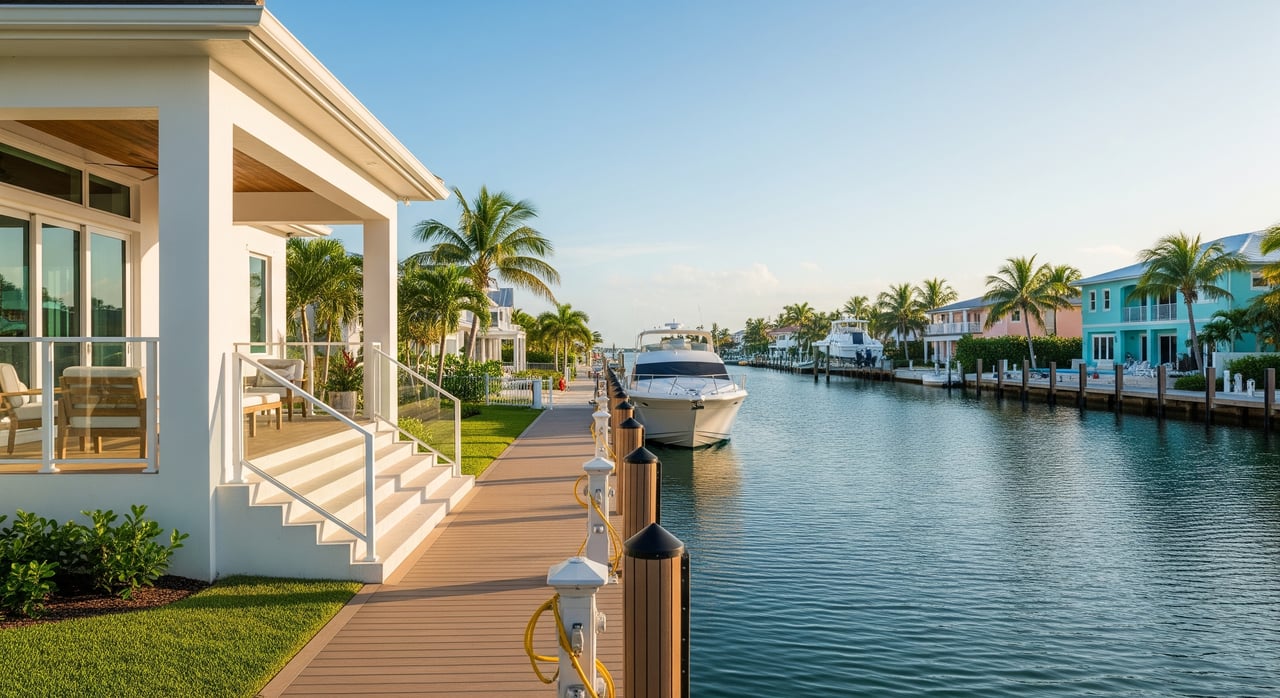
Choosing between a boat-basin home and a canal-front home in Key Colony Beach can shape your everyday life on the water. If you picture quiet evenings at the dock, easy tie-ups, or quick runs to fishing grounds, the water in front of your home matters as much as the house itself. In this guide, you’ll learn how basin and canal frontage differ in privacy, wake action, depth, maneuvering, access, and even appraisal outcomes, plus practical steps to buy or sell with confidence. Let’s dive in.
Boat basin vs canal: what it means
Boat basin: A basin is a semi-enclosed or enclosed harbor area with a single or controlled entrance to open water. It typically offers calmer conditions and a more sheltered feel.
Canal-front: A canal-front home sits on a navigable canal that connects to larger waterways. Canals can be active routes for boat traffic with more variable wakes and currents.
In Key Colony Beach, water type is a major driver of value and lifestyle. With a high concentration of private docks and built-out waterfront lots, buyers often start their search by picking the water experience that fits their boat, routines, and goals.
Key value drivers in Key Colony Beach
Privacy and exposure
- Basin frontage often feels more private with fewer passersby and less direct sightlines into outdoor spaces.
- Canal frontage can have more through-traffic and direct views to nearby homes across the water.
- For many buyers, privacy supports a price premium. Appraisers look for comparable sales that show market recognition of this.
Wake, chop, and water conditions
- Basins usually reduce wake and cross chop, which is ideal for small craft, kayaks, and dockside dining.
- Canals can see wake from passing boats, shifting currents, and wind-driven chop depending on location.
- If water conditions limit comfortable dock use, appraisers may treat that as a functional issue that affects value.
Docking ease, depth, and access
- Basins often offer calmer water at the dock and can be designed for easy maneuvering. Entrance width and access routes vary.
- Canals can be simple to navigate but may involve bridge clearances, tidal flow, or turning constraints. Depth varies by canal and can change with shoaling.
- Depth at mean low water and permitted dock or lift capacity help determine what size boat you can keep and directly influence market value.
Sightlines and visibility
- Basin layouts may angle lots in ways that reduce direct views between neighbors.
- Canal layouts are often linear, with homes directly across the way in clear view.
- Sightlines affect perceived privacy and noise and can influence both marketability and price.
Boat security and shore infrastructure
- Basin moorage can feel more secure thanks to reduced wake. Some community basins also offer managed facilities.
- On canals, dock design and seawall condition are critical, especially where exposure to wake is higher.
- Appraisers allocate value to well-documented, permitted docks, lifts, and seawalls in good condition.
Insurance, flood, and permits
- Both frontage types face similar coastal insurance realities. Elevation, seawall integrity, and proximity to open water can influence premiums.
- FEMA flood zone designation, base flood elevation, and an elevation certificate play a major role in insurability and financing.
- Dock, seawall, and dredging work require proper state and local permits. Unpermitted improvements can reduce marketability and value.
How appraisers and informed buyers evaluate
- Sales comparison approach: Appraisers prioritize recent local comps with the same waterfront type, similar depth, dock or lift capacity, orientation, and lot setup.
- Paired-sales analysis: When exact comps are scarce, they isolate the effect of water type by comparing similar sales that differ only by basin vs canal.
- Contributory value: Permitted docks, lifts, and seawalls are treated as site improvements with value based on condition and utility.
- Documentation: Depth measurements at mean low water, permits, elevation certificates, surveys, and records of seawall or dock work help support higher values.
Which fits your lifestyle?
- Full-time residents: Often prefer low-maintenance, protected moorage, reduced wake, and privacy for everyday use.
- Boaters and anglers: Focus on depth, clear routes, bridge clearances, and minutes to open water. A canal with direct access may be the better fit.
- Non-boaters and entertainers: May lean toward calmer basin settings for dockside gatherings, even if the route to open water is slightly longer.
Positioning your listing for success
Documents to prepare before listing
- Recent elevation certificate and FEMA flood zone information.
- Dock and seawall permits, surveys, and any dredging history.
- Maintenance and repair records for seawalls, docks, and lifts.
- Measured depth at mean low tide, typical route and distance to open water, and any bridge clearances.
- Recent example insurance quotes or estimates for flood and wind coverage.
Marketing your waterfront features
- Describe the water accurately: “protected basin with reduced wake” or “direct canal frontage with quick access to main channels,” backed by depth and permit data.
- Use aerials and maps to show orientation, boat traffic patterns, and the path to the Atlantic or Gulf.
- Showcase dock details: permitted boat size, lift capacity, power, water, lighting, and tie-off features.
- For basins, highlight privacy and suitability for entertaining. For canals, emphasize speed to fishing grounds if depth allows.
Pricing and negotiation
- Support your pricing with local comps that match waterfront type and dock utility.
- If exposure to wake is a concern, consider small concessions like a credit for dock enhancements rather than waiting for appraisal issues.
- Be transparent about any restrictions or shared-basin rules to maintain buyer confidence.
Buyer due diligence checklist
- Confirm FEMA flood zone, base flood elevation, and get an elevation certificate.
- Verify permits for docks, lifts, seawalls, and any dredging.
- Measure depth at mean low water and check for shoaling patterns.
- Review bridge clearances and navigational constraints along your route.
- Inspect utilities at the dock: power, water, lighting, and pump-out access.
- Consider a marine survey of the seawall and dock.
Seller prep checklist
- Gather maintenance and warranty records for dock and seawall work.
- Address visible items like loose boards, corroded hardware, or minor rot.
- Document water depth, permitted lift capacity, and route to open water.
- Prepare insurance examples to help buyers estimate carrying costs.
- If there are wake or shoaling concerns, provide professional assessments and mitigation plans.
Putting it all together
There is no one-size-fits-all answer in Key Colony Beach. A basin-front home can command strong interest for its calm water, privacy, and easy dockside living. A canal-front home can outperform when depth, lift capacity, and a direct route to open water align with serious boating needs. The best choice is the one that matches your lifestyle, your vessel, and the documentation that supports value.
Ready to compare real options and put data behind your decision? Request a private consultation with Ally Kelley for a tailored strategy, premium marketing, and white-glove guidance built on deep local expertise.
FAQs
Do basin-front homes in Key Colony Beach always sell for more?
- Not always. Premiums depend on market preferences, water depth, dock and lift capacity, route to open water, condition, and comparable sales.
How do appraisers adjust for basin vs canal in the Keys?
- They use recent local comps with matching waterfront type or run paired-sales to isolate the impact, then value permitted docks, lifts, and seawalls based on utility and condition.
Which is better for quick fishing access from Key Colony Beach?
- A canal with a short, direct route to the main channel can be faster. That said, depth, bridge clearances, and obstructions matter more than water type alone.
What permits are needed for docks or seawalls in the Florida Keys?
- Dock, boat lift, seawall, and dredging work usually require permits at multiple levels. Unpermitted work can create title, insurance, and appraisal issues.
What should buyers verify before offering on a waterfront home?
- Confirm elevation and flood zone, depth at mean low water, dock and seawall permits, route and clearances to open water, and recent insurance estimates.