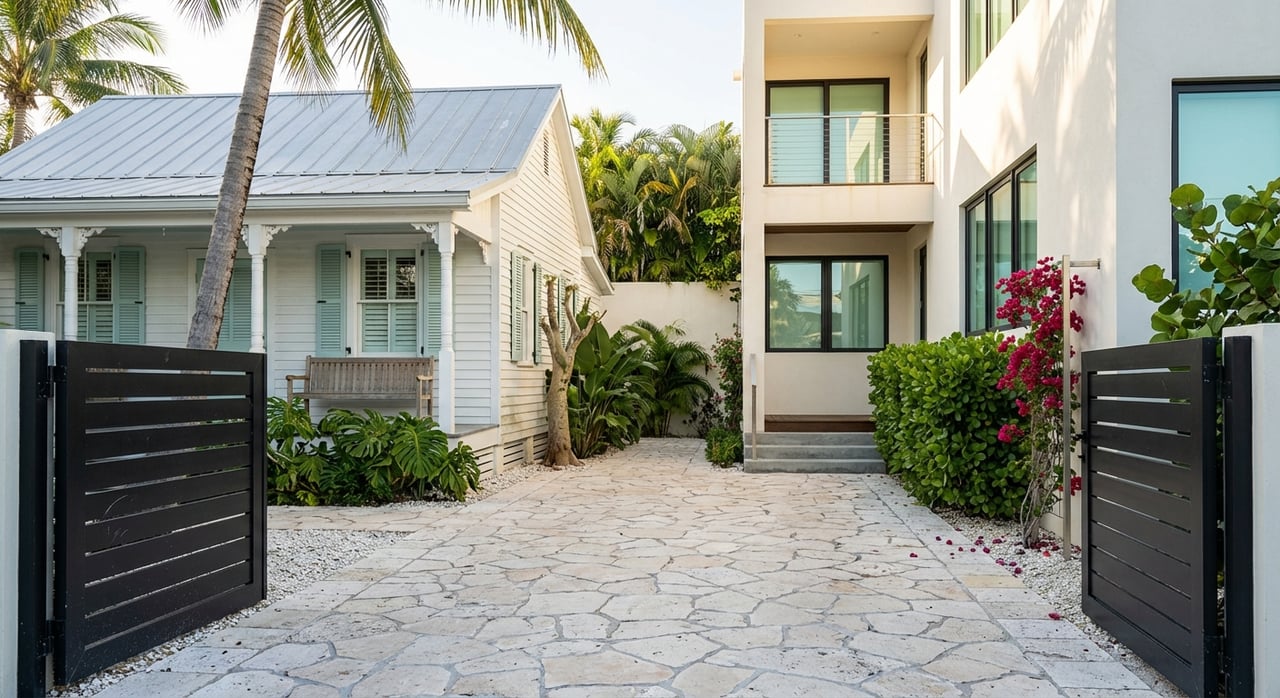
Are you torn between the romance of a Key West Conch house and the ease of a new luxury build? You want a home that fits your lifestyle, holds value, and is practical in a coastal climate. In this guide, you’ll compare architecture, maintenance, permitting, insurance, and resale to choose with confidence. Let’s dive in.
Key West luxury at a glance
Old Town’s historic homes deliver character, porch life, and a walkable setting close to dining and culture. Newer luxury builds and condos focus on resilience, modern systems, and lower day‑to‑day upkeep. Both can be excellent choices when you match them to how you live and how hands‑on you want to be with maintenance.
- Historic Old Town: wood-frame construction, deep porches, shutters, and metal roofs within the Key West Historic District. Many exteriors require historic review. Learn more about the area’s heritage through the Old Island Restoration Foundation.
- Contemporary builds and condos: concrete or masonry construction, impact-rated openings, elevated floor systems, and open layouts designed for coastal durability. Expect lower initial maintenance but possible HOA rules and fees.
Architecture and design
What defines a historic Conch home
Historic homes in Old Town reflect Bahamian and Victorian influences. Typical features include raised wood frames, generous verandas, high ceilings, side-hinged louvered shutters, tin or metal roofs, and pastel exteriors. Landmark homes like the Audubon House and the Hemingway House showcase the style’s craftsmanship and charm, which many buyers value for its sense of place. For context on local preservation and tours, explore resources from the Old Island Restoration Foundation.
What defines a modern luxury build or condo
Newer luxury properties often use engineered foundations or pilings, concrete block or reinforced concrete walls, impact glass or rated shutters, and modern mechanical systems. Plans emphasize indoor‑outdoor flow with low‑maintenance finishes. Builders choose these materials for durability in a marine environment and for easier insurance underwriting when mitigation features are documented.
Maintenance in a coastal climate
Salt, humidity, and finishes
Salt-laden air and humidity accelerate corrosion of metals, exterior hardware, and HVAC components. Expect more frequent exterior paint cycles and regular rinsing or inspections for outdoor mechanicals. For roofing specifically, coastal exposure can shorten service life; see how salt air affects roofs in this overview on coastal roof corrosion and maintenance.
Wood homes, termites, and moisture
Historic wood-frame homes need routine termite inspections and preventive treatments. Good ventilation, dehumidification, and moisture control are key. Budget for ongoing pest management and periodic wood repairs in addition to normal home upkeep.
Flood risk and elevation
Flood risk is a major long‑term cost driver in the Keys. Review the County’s tools and preliminary coastal flood maps for Monroe County to understand elevation needs and insurance implications for a specific address. Local tide-gauge data also show a measurable rise in sea level; see the Key West station’s NOAA sea‑level trend as you weigh near‑term nuisance flooding and long‑range planning.
Insurance and risk management
Flood insurance now uses Risk Rating 2.0, which prices policies by property‑specific risk. Monroe County participates in the NFIP and the Community Rating System; policyholders receive a countywide discount tied to the community’s class. Get current quotes and learn about local discounts on the County’s NFIP and CRS program page.
You can often reduce premiums with documented mitigation. Ask insurers about credits for impact windows and FORTIFIED upgrades. The IBHS program outlines incentives and standards for resilience; explore current FORTIFIED incentives and guidance.
If you are considering elevation or retrofits, local nonprofits provide education and guidance that can make complex projects more feasible. A good starting point for Keys‑wide homeowner resources is FIRMKeys.
Permitting, renovation, and rules
Old Town historic review (HARC)
If a property sits within the Key West Historic District, exterior changes generally require a Certificate of Appropriateness from the Historic Architectural Review Commission. The scope includes items like additions, porches, roofs, fences, pools, and visible materials. Some routine repairs may be approved at staff level, but larger changes go to a full review. For details and pre‑application guidance, visit the City’s HARC page.
Building codes for new work
New builds and substantial system upgrades must meet the Florida Building Code and local flood requirements. Design wind loads and opening protection apply throughout coastal regions, with local officials guiding address‑specific rules. For background on statewide code structure, see the Florida Building Commission’s overview resources. Always confirm details with the City or County building department for a specific property.
Condos and HOAs
Newer condominiums and planned developments are governed by covenants and HOA rules. Review the CC&Rs, reserve studies, and any recent special assessments. These documents will clarify alteration approvals, maintenance responsibilities, and short‑term rental rules.
Lifestyle and resale fit
Old Town lifestyle
If you want a walkable, garden‑porch lifestyle near Duval Street, museums, and dining, Old Town may be the best fit. Expect smaller lots, potential street parking, and lively surroundings. Buyers often pay a premium for beautifully restored, well‑documented homes that balance historic charm with updated systems.
Newer homes and condos lifestyle
If you prefer private parking, elevators, gyms, and modern mechanicals, contemporary homes and condos can simplify daily life. These properties often attract full‑time residents and second‑home owners looking for lower‑touch ownership and clear documentation for insurance and financing.
Resale dynamics
- Historic cottages: strong niche demand from buyers who value authenticity. Resale benefits from permitted updates, sensitive modernization, and clear maintenance records.
- Turnkey modern homes and condos: broader buyer pool that prioritizes energy efficiency, resilience features, and straightforward underwriting.
- Rentals: municipal and HOA rules change. Confirm current transient‑rental ordinances and building policies before relying on rental projections.
Your due diligence checklist
- Verify if the home is in the Historic District and whether exterior work needs a HARC Certificate of Appropriateness. Start with the City’s HARC guidance.
- Pull County flood information. Check preliminary coastal flood maps, request an Elevation Certificate, and obtain a current flood‑insurance quote.
- Ask whether the NFIP Community Rating System discount applies. Learn more on the County’s NFIP/CRS page.
- Order a wind‑mitigation inspection and a full home inspection that includes moisture, corrosion, and termite checks.
- Request roof and mechanical records, including dates, product approvals, and any resilience upgrades like impact windows or FORTIFIED improvements. See the FORTIFIED program for potential credits.
- If you plan updates to a historic cottage, speak with HARC staff early about precedent and process. Agendas and open hours are public on the HARC page.
Which one is right for you?
Choose a historic Old Town home if you love authentic architecture, porch living, and being close to the island’s cultural core. Be ready for active stewardship and historic‑district review for exterior work.
Choose a contemporary luxury build or condo if you want modern engineering, impact-rated protection, and lower routine maintenance. These can be easier to underwrite and insure when mitigation is documented.
Not sure? Tour both. Pay attention to noise, parking, humidity levels, and how each home feels at different times of day. Then model ownership costs with real insurance quotes and inspection findings.
When you are ready to compare specific properties, schedule a private consult. With boutique guidance and Sotheby’s global reach, Ally Kelley will help you evaluate condition, permitting, insurance, and lifestyle fit so you can buy with confidence.
FAQs
Can I change the exterior of a historic Old Town home in Key West?
- Most exterior work within the Historic District requires a Certificate of Appropriateness through HARC. Review process details and contact staff via the City’s HARC page before planning.
How do flood insurance costs differ for a Key West house versus a condo?
- It depends on property‑specific risk under Risk Rating 2.0. Get address‑level quotes and ask about the County’s CRS discount; see Monroe County’s NFIP and CRS overview.
How often will salt air drive repainting or roof work near the ocean?
- Coastal exposure accelerates corrosion and finish wear. Plan for more frequent maintenance and use marine‑appropriate materials; see this guide on salt air and roof performance.
Which is typically easier to insure or finance in Key West: an Old Town cottage or a new build?
- Newer builds with documented mitigation and current code compliance often underwrite more predictably. Historic homes can be insurable and financeable but may require inspections and targeted upgrades.
How do I check flood risk for a specific Key West address before I buy?
- Review Monroe County’s preliminary coastal flood maps, request an Elevation Certificate, and obtain current flood and wind quotes as part of due diligence.