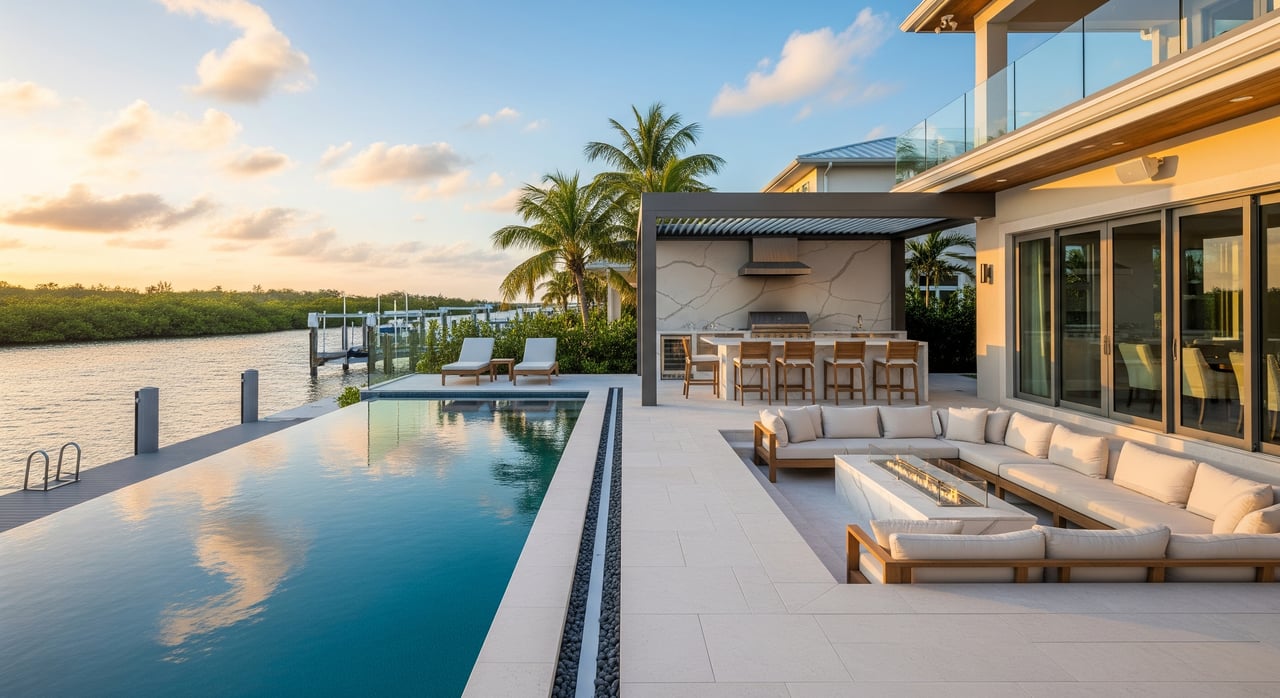
Salt air, strong sun, and life on the water are why you love the Lower Keys. They also shape what works outside your home. If you want spaces that look beautiful, stand up to the elements, and impress buyers in 33042, the right upgrades make all the difference. In this guide, you’ll learn which outdoor features matter most, which materials last, and how to handle permits and maintenance with confidence. Let’s dive in.
Keys climate sets the rules
Living on Little Torch Key means constant UV, humidity, and salt spray. These conditions speed up fading, corrosion, and mildew. Planning with durability in mind helps you avoid costly rework and keeps spaces market ready.
Hurricanes and coastal storms also drive design and installation choices. For a high-level view of risk and seasonality, review coastal guidance from NOAA. It pays to select materials and systems that can be secured before a storm and inspected easily after.
Summer kitchens built for salt air
Choose marine-grade materials
Use cabinet frames in powder‑coated aluminum or sealed masonry. Pick appliances and hardware in 316 stainless steel. For counters, granite, quartzite, or outdoor porcelain perform well in sun and heat. Avoid untreated wood and standard indoor-grade metals.
Maintenance made simple
Rinse salt residue with fresh water and wipe gaskets after heavy spray or storms. Lubricate moving parts with marine‑grade products. Inspect fasteners and swap any 304 steel for 316 as needed.
Permits and code
Attached or permanent outdoor kitchens typically require electrical and plumbing permits, and they must meet wind load and flood considerations under the Florida Building Code. Keep manuals, permits, and inspection records in a single folder to show buyers.
Why buyers care
A clean, code‑compliant kitchen that pairs with shaded seating is a high‑value feature in the Keys. Buyers pass on corroded, ad‑hoc builds that signal more work than fun.
Shade structures that last
Materials and types
Powder‑coated aluminum pergolas and pavilions offer low maintenance and strong salt resistance. If you prefer wood, dense tropical hardwoods can work with ongoing care and 316 fasteners. For adjustable comfort, motorized louvered roofs should use marine‑grade motors and sealed electrical components.
Design for wind
Engineer structures to local wind loads and consider removable slats or fabric panels you can secure for storms. Quality hardware, tie‑downs, and clear operating procedures matter in hurricane season.
Permits and peace of mind
Permanent structures often need permits and, for larger builds, engineered plans. Documenting compliance now reduces surprises later when a buyer’s inspector reviews your property.
Decking that resists salt and sun
Smart surface choices
- Marine‑grade aluminum decking for top corrosion resistance and slip control.
- High‑quality capped composite or PVC for low maintenance and solid warranties.
- Tropical hardwoods for natural beauty with regular refinishing.
Fasteners and structure
Use 316 stainless fasteners and corrosion‑resistant connectors throughout. Avoid mixing dissimilar metals without isolation pads or sleeves.
Upkeep that pays off
Sweep and rinse regularly, and clean shaded areas where mold can grow. Re‑oil hardwoods as needed and inspect joints yearly.
Buyer value
Buyers love low‑maintenance surfaces that still look great after summer. Aluminum and high‑end composites show especially well in the Lower Keys.
Docks and boat lifts buyers love
Materials that hold up
Look for marine‑grade aluminum frames and non‑skid composite or aluminum decking. Pilings should match site conditions, with strong corrosion protection on all metal components. Electrical gear must be marine‑rated and on GFCI circuits.
Permitting and environmental rules
Marine work is heavily regulated. Most docks, lifts, and seawalls require approvals from Monroe County, the Florida Department of Environmental Protection, and often the U.S. Army Corps of Engineers. Some locations also involve submerged‑lands leases or size and placement limits to protect navigation and resources.
Safety and seasonal care
Inspect cables, straps, and sheaves routinely, especially after storms. Follow lockout procedures for electrical work and secure or de‑rig equipment before hurricanes.
Buyer value
A professionally installed, fully permitted dock and lift is a standout selling point in the Keys. Unpermitted work can delay closings and reduce offers.
Lighting for mood and wildlife
Choose coastal‑rated LED systems
Pick low‑voltage LEDs with sealed housings and corrosion‑resistant finishes. Warm color temperatures in the 2700K to 3000K range create inviting paths and outdoor rooms while keeping glare down.
Turtle‑friendly guidance
Beach‑adjacent homes may need sea‑turtle friendly solutions. Use shielded, low‑intensity, long‑wavelength fixtures and timers. Review best practices from the Florida Fish and Wildlife Conservation Commission.
Maintenance and appeal
Clean lenses to remove salt film and check gaskets annually. Thoughtful lighting extends evening use and increases curb appeal while showing care for the environment.
Plan for durability and storms
Best materials hierarchy
- Excellent: 316 stainless, powder‑coated marine aluminum, fiberglass, and solid concrete or stone.
- Good with care: high‑quality capped composites, PVC decking, and tropical hardwoods.
- Avoid when possible: 304 stainless and standard galvanized steel near continuous salt spray, untreated wood.
Simple care calendar
- After major storms: inspect structures, fasteners, and electrical systems.
- Monthly to seasonally: rinse salt, remove debris, wipe seals and gaskets.
- Annually: tighten connectors, test shore power and GFCIs, treat wood as needed.
Hurricane readiness
Provide removable covers, secure tie‑downs, and documented procedures for lifts and shades. A clear plan reassures buyers that the home is ready for storm season.
Permits, vendors, and documentation
What to gather and keep
- Building permits and inspection records for kitchens, pavilions, elevated decks, and major electrical or plumbing.
- Marine permits and drawings for docks and lifts, plus any coastal or environmental approvals.
- Engineer‑stamped plans for structural work and wind‑load calculations.
- Flood‑zone documents and elevation certificates from FEMA.
- Warranties, manufacturer manuals, and service logs for annual inspections.
Choosing the right team
Hire licensed Florida contractors with coastal experience. Ask for proof of insurance, a portfolio of marine and outdoor projects, and written warranties that call out corrosion protection. Request a maintenance handover plan and a seasonal checklist at project closeout.
Staging and photography tips
- Keep the outdoor kitchen uncluttered with clean, neutral furnishings.
- Highlight water access, permitted dock and lift, and include close‑ups of hardware and permit placards.
- Showcase resilience by noting engineered connections or hurricane procedures.
- Add twilight photos with shielded, warm lighting where appropriate.
- Offer an “Outdoor Features Dossier” with permits, warranties, and vendor contacts to reduce buyer uncertainty.
What adds value in the Lower Keys
Buyers here want outdoor living that is easy to enjoy and built to last. Features that support boating, shaded entertaining, and low maintenance tend to outperform cosmetic add‑ons. Durable materials and documented permits send strong signals about quality and care.
National trend reports show steady buyer interest in outdoor kitchens, decks, and functional upgrades that extend living space. For broader perspective on buyer preferences, see the National Association of Realtors. Your exact return depends on local demand, workmanship, and how well each feature fits your property’s water access and setting.
If you are weighing which projects to tackle before listing, start with the items that prove resilience and ease of ownership. That clarity helps buyers move quickly and confidently.
Ready to upgrade or sell?
Whether you are planning a new summer kitchen or prepping a waterfront listing in 33042, you deserve guidance tailored to island life. For vendor introductions, permitting coordination, and a polished marketing plan that highlights your outdoor features, reach out to Ally Kelley. Request a private consultation and move forward with confidence.
FAQs
Do docks and boat lifts in Monroe County need permits?
- Yes. Most marine projects require Monroe County approvals and may also need state and federal permits through agencies such as the Florida DEP and the U.S. Army Corps.
What outdoor materials last longest near salt water?
- Top performers include 316 stainless, powder‑coated marine aluminum, fiberglass, and high‑quality capped composites. Tropical hardwoods can work with regular care.
How should I maintain a dock or boat lift in the Keys?
- Do visual checks after storms, perform seasonal cleaning and lubrication, and schedule an annual professional inspection for mechanical and electrical systems.
Are there special lighting rules for beachfront properties?
- Many coastal areas follow sea‑turtle friendly lighting guidelines that call for shielded, low‑intensity, amber or long‑wavelength fixtures on timers.
Will a well‑built outdoor kitchen help resale in 33042?
- Typically yes. A permitted, low‑maintenance outdoor kitchen that pairs with shaded seating and views is a strong selling point when built for coastal conditions.